
Way to Rome


There are many ways to go to Rome
 

There are many ways to solve social Inequality 


I saw an article from Inside Indonesia by Astrid Reza 
(http://www.insideindonesia.org/current-edition/making-food-politics-personal 
about Young people in Yogyakarta who learn design and build an edible garden.

12
Building a raised bed in Sogan, Sleman. Making a raised bed is like making a lasagne. Layers of green compost, brown compost, cow dung and soil are piled on top of each other until the bed is suitably high-Rita Dharani

There are many ways to go to Rome. So there are many ways to solve Social Inequality too :) When I was reading this article, I smile and I am sure it will be great idea for solving social inequality. Keep in mind that Indonesia has tropical weather and support the second biodiversity in the world , it will be awesome idea to develop edible garden because almost anything kind of plants can live really well in here. 

06
An edible mandala garden at Nitiprayan after three months. This garden now supports the family who owns the land and is even used by neighbours- Paul Daley


In Indonesia, I live in East Kalimantan. It is big province that has small amount of population compared another island. Because of that, we still have enough land to build an edible garden. Most of people has big backyard that still empty until now.
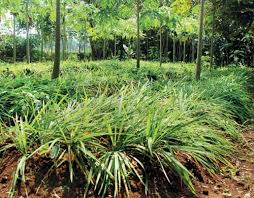


Besides being profession, making edible garden can help someone who doesn't have daily job to be more active. The example old people, housewife, etc. Its also really good to teach our children how to plant something so they can use their skill when they are growing up. 

In February 2013, twenty people come together to transform an empty plot of land in Nitripayan, a village in the southern part of Yogyakarta. Permaculture, the practice of designing self-sustaining agricultural systems, is inspired by activist from Australia who had recently visited. Most of people had never done any gardening or farming in their lives. But after a hard day’s work they had planted amaranth, tomatoes, chillies, lemongrass, ginger and turmeric. Within three months, they were harvesting their produce, using it in day-to-day cooking and even sharing it with neighbors.


10 resize
Anybody who wants to cook healthy organic food using local ingredients can join the kitchen team, who prepare the food to be eaten after a long day in the garden- Astrid Reza


11
Permablitz activists prefer to use local materials. Here cow dung from a farm in Sleman is being used in the construction of a garden- Rita Dharani

Besides doing just with our family, we also can make an edible garden together with neighbors or friends.  Because In Yogyakarta it  also become an important way of recreating a sense of community between increasingly isolated people living urban lifestyles. People are attracted to it because of the opportunity that offers to work and eat together. We will feel solidarity and unity that listed in our constitution, Pancasila.


I am sure we can do it 

Comments

Popular posts from this blog

Summary: Political Man: The Social Bases of Politics, by Seymour Martin Lipset. London : Heinemann, 1960

Political Man by Seymour Martin Lipset (1960) majorly explain the requisites to sustain democracy. He argues that economic development (wealth, industrialization, urbanization, and education) facilitates democracy by influencing political culture and class structure. Learning from history, Lipset emphasized that a high level of education is necessary but not yet sufficient to sustain democracy. Better education will help people to broaden outlook, to be more tolerant, restrain them from extreme doctrines and increase their capacity to electoral choices which eventually lead them to construct a more democratic political culture. Moreover, he also emphasized that economic development will drive lower class to a larger middle-income class through an increased income, greater economic security and higher education. This is important because a big middle class is capable of rewarding moderate and democratic parties and penalizing extremist parties, whereas lower class society is prone t...

Social Inequality in Indonesia

My name is  Denisa A melia Kawurya n. My friends usually call me denisa.  I stay in Las Vegas as an exchange student and study in Sierra Vista High School. I come from Indonesia. In my country, I live in East Kalimantan and study in SMA 10 Samarinda. This is my first blog. I am really happy learn about technology especially social media. It is because I usually found difficulties to communicate by social media. Nowadays, knowing how to use social media is really important. It makes our life easier especially for communicating with each other. Social Inequality :(  Indonesia is great and big country, unfortunately not all Indonesian live in welfare condition.  Many of them doesn't have place to live, clothes to wear and  food to eat . But, it doesn't matter that all of indonesian is poor. Many Indonesian also live in really good condition, they have anything that they need. They also can do anything that they want to do. How it would be happened ? I...

Campaign Final Reflection

Campaign Final Reflection Thank you GNML for teaching us social media. After learning more about it, I realize we can help people in so many ways. I also know more about International problem in many countries.  I thought social media just for fun, but it is not. This learning not just teach me about how to use social media in good way but also made me realize who I am and what I want to be.   This is my final reflection about social media. 1. Blog I love it very much. I did not understand how to make blog before. I likes writing but I never think to make a blog, even just once. After learning in GNML, I learn a lot about it. How to make RSS Feed is the most difficult. Now, I realize how important blog to my social change campaign. Blog also good media to write about our organization, group and etc. Many people will freely read our blog and without we realize we help people to give them inspiration, motivation or willingness to help each other.  2. ...